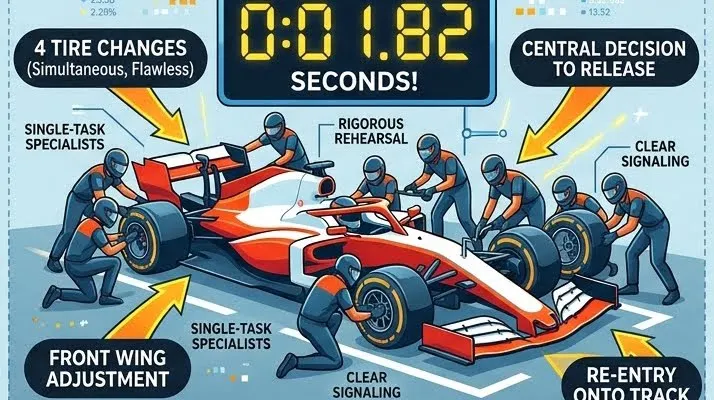
A Formula One pit crew changes four tires, adjusts the front wing, and sends a car back onto the track in two seconds. Two seconds!!.
No one is yelling, “Move faster.” No one is asking what to do. No one is checking with the person next to them before acting.
Every member of the crew, all 20-plus of them: knows exactly what they own, when to move, and when to get out of the way. Their speed is born from clarity, not urgency.
Here’s what a world-class pit crew knows that would benefit any technical team: The fastest way to scale together is to remove every question about “who ships what” before the sprint arrives. Elite teams architect the sequence, trust the system, and define the roles so clearly that no hesitation exists. Creating the clarity that produces speed is always intentional. It never occurs by chance or accidental success.
The mistake many tech leads make is to create urgency instead. Leaders apply pressure by reminding everyone of the gravity of the launch. They keep the pressure on by micromanaging every ticket and commit.
Unfortunately, it doesn’t work. Urgency without clarity creates friction, confusion, and technical debt. But it can’t create speed.
Leaders who build clarity before urgency follow several of the lessons pit crews get right. Here’s a short list:
I. Every task has exactly one DRI (Directly Responsible Individual). Not the squad or a subset. One person. When everyone is responsible, no one is.
II. The workflow is sacred. The order of operations matters. A pit crew doesn’t improvise. They have designed a sequence to eliminate conflicts and redundancy. High-performance teams of all stripes map the logic before assigning the work.
III. The staging is the work. A pit crew practices a stop hundreds of times before race day. For technical teams, this rehearsal normally takes the form of dry runs where everyone articulates what they own, in what order, and with what handoffs.
IV. They architect for the edge case. For Formula One crews, this means preparing for multiple scenarios, such as weather changes, damage, and penalties. This allows them to adapt instantly. Project teams ask, “What could break?” and build the contingency plans accordingly.
V. During deployment, individuals act autonomously within their roles. Team leads set direction and guide rehearsal, but once execution begins, they trust the engineers to execute. They don’t hover, make last-minute suggestions, or second-guess anyone.
Pit crews demonstrate what happens when preparation, precision, and teamwork are pushed to the extreme. By maintaining a focus on clarity, they achieve amazing execution times.
The implication for tech teams is straightforward: when execution slows down, the issue isn’t a lack of urgency, it’s a lack of clarity.